Zur Startseite
820К+ Patienten haben seit 2014 Hilfe erhalten
50 Länder
1,500 Kliniken
6K+ Bewertungen
3K+ qualifizierte Ärzte

Was kostet Augenheilkunde in Thailand?

Ophthalmology in Thailand typically costs from $2,100 / 77,700฿ to $4,600 / 170,200฿. Total expenses depend on the specific surgical technique, the type of intraocular lenses chosen, and the hospital's accreditation level. International patients often find 50-75% savings compared to the costs in the US.

Typical Ophthalmology Costs in Thailand

  • Ophthalmological investigation: $100 / 3,700฿ – $200 / 7,400฿
  • Cataract diagnostic before OP: $100 / 3,700฿ – $300 / 11,100฿
  • Laser eye surgery: Preis auf Anfrage
  • Corneal transplant: $4,500 / 166,500฿ – $8,000 / 296,000฿
  • Strabismus surgery: $1,500 / 55,500฿ – $2,800 / 103,600฿
  • Retinal detachment surgery: $3,000 / 111,000฿ – $6,000 / 222,000฿
  • Glaucoma treatment: $1,500 / 55,500฿ – $3,000 / 111,000฿
  • Cataract surgery with IOL replacement: $1,200 / 44,400฿ – $2,000 / 74,000฿
  • ReLEx SMILE eye surgery: $2,400 / 88,800฿ – $3,200 / 118,400฿
  • IOLs implantation: Preis auf Anfrage

Major medical hubs for eye care include Bangkok, Phuket, and Chiang Mai. While prices remain relatively consistent across these regions, top-tier facilities in Bangkok may have slightly higher package rates. Consult with a specialist to get accurate pricing for your specific eye condition.

ThailandTürkeiÖsterreich
Vitrektomievon $2,200 / 81,400฿von $2,300 / 85,100฿von $4,500 / 166,500฿
Strabismus-Operationvon $1,500 / 55,500฿von $1,100 / 40,700฿von $3,000 / 111,000฿
Strabismus-Behandlungvon $1,500 / 55,500฿von $900 / 33,300฿von $2,500 / 92,500฿
ReLEx SMILE Augenchirurgievon $2,400 / 88,800฿von $1,800 / 66,600฿von $2,200 / 81,400฿
Photorefraktive Keratektomievon $1,500 / 55,500฿von $1,000 / 37,000฿von $1,600 / 59,200฿
Daten von Bookimed geprüft (Stand: July 2026), basierend auf Patientenanfragen und offiziellen Angeboten von 25 Kliniken weltweit. Die Durchschnittskosten basieren auf echten Rechnungen (2025–2026) und werden monatlich aktualisiert. Die tatsächlichen Kosten können variieren.

Vorteile und Garantien von Bookimed

Direkte Preise

Bookimed erhebt keine zusätzlichen Gebühren für Augenheilkunde-Behandlungspreise. Die Preise stammen aus den offiziellen Preislisten der Kliniken. Sie zahlen direkt in der Klinik für Ihre Behandlung bei Ihrer Ankunft im Land.

Nur geprüfte Kliniken und Ärzte

Bookimed setzt sich für Ihre Sicherheit ein. Wir arbeiten nur mit medizinischen Einrichtungen zusammen, die hohe internationale Standards in der Augenheilkunde Behandlung einhalten und über die notwendigen Lizenzen verfügen, um internationale Patienten weltweit zu behandeln.

Kostenlose 24/7-Hilfe

Bookimed bietet kostenlose fachliche Unterstützung. Ein persönlicher medizinischer Koordinator unterstützt Sie vor, während und nach Ihrer Behandlung und hilft Ihnen bei allen Fragen. Sie sind nie allein auf Ihrer Augenheilkunde Behandlungsreise.

Warum wir?

Ihr persönlicher medizinischer Koordinator bei Bookimed

  • Unterstützt Sie in jeder Phase
  • Hilft bei der Auswahl der richtigen Klinik und des passenden Arztes
  • Sorgt für einen schnellen und bequemen Zugang zu Informationen

Die besten Kliniken für Augenheilkunde in Thailand: 25 geprüfte Optionen und Preise

Das Bookimed-Klinikranking basiert auf datenwissenschaftlichen Algorithmen und bietet einen vertrauenswürdigen, transparenten und objektiven Vergleich. Dabei werden die Patientennachfrage, Bewertungsergebnisse (sowohl positiv als auch negativ), die Häufigkeit von Aktualisierungen der Behandlungsoptionen und Preise, die Reaktionsgeschwindigkeit und die Klinikzertifizierungen berücksichtigt.
TRSC Internationales Augen- und Sehzentrum
Intrarat Hospital
Anzeige
Laser Vision @ Bangkok Eye Hospital
Klinik Navamin 9
ID Clinic Bangkok
Sie haben sich 4 von 25 Kliniken angesehen

Die besten Zentren für Augenheilkunde in Thailand

  • TRSC Internationales Augen- und Sehzentrum, Thailand
  • Intrarat Hospital, Thailand
  • Laser Vision @ Bangkok Eye Hospital, Thailand
  • Klinik Navamin 9, Thailand
  • ID Clinic Bangkok, Thailand

Die besten Spezialisten für Augenheilkunde in Thailand — 33 Ärzte mit Bewertungen und Preisen

Alle Ärzte anzeigen
verifiziert

Pichit Naripthaphan

29 Jahre der Erfahrung

Präsident des Cataract and Refractive Surgery Club von Thailand – Dr. Naripthaphan kombiniert nationale Führung mit über 28 Jahren chirurgischer Expertise.

  • Über 900 Katarakt-Eingriffe durchgeführt
  • In den USA in LASIK und fortgeschrittenen refraktiven Techniken ausgebildet
  • Ehemaliger Chefarzt für Refraktive Chirurgie am Rajvithi-Krankenhaus
  • Spezialisiert auf komplexe Katarakt- und Refraktivfälle
  • Leitender Berater am Bumrungrad-Krankenhaus
verifiziert

Anun Vongthongsri

31 Jahre der Erfahrung

Erster thailändischer und südostasiatischer Augenarzt, der an der Washington University in Hornhaut- und refraktiver Chirurgie ausgebildet wurde – Dr. Vongthongsri hat Tausende von LASIK- und Oberflächenlaser-Eingriffen durchgeführt.

  • Leiter der Abteilung für Hornhaut- und refraktive Chirurgie am Ramathibodi-Krankenhaus seit 2001
  • Gründer und medizinischer Leiter von Laser Vision am Bangkok Eye Hospital
  • Bildet andere Augenärzte in fortgeschrittenen refraktiven Techniken aus
  • Zertifizierter Experte für Excimer-Laser-Verfahren
verifiziert

Sasi Yaisawang

12 Jahre der Erfahrung

Dr. Yaisawang ist ein vom Royal College of Ophthalmologists of Thailand zertifizierter Spezialist für Hornhaut- und refraktive Chirurgie.

  • Doktorand der klinischen Wissenschaften an der Chulalongkorn-Universität
  • Fellow des International Council of Ophthalmology
  • Zertifikat in Telemedizin von der Harvard University
  • Spezialisiert auf fortgeschrittene Hornhaut- und refraktive Verfahren
verifiziert

Ponpawee Jindarak

19 Jahre der Erfahrung

Über 1.100 Kataraktbehandlungen durchgeführt – Dr. Jindarak kombiniert Glaukom-Expertise mit chirurgischer Präzision am Intrarat Hospital.

  • Fellowship-Ausbildung in Glaukom an der University of Illinois, Chicago
  • Spezialisiert auf komplexe Augenerkrankungen und Sehkorrekturen
  • Zertifiziert durch die Chulalongkorn-Universität – Thailands führende medizinische Fakultät
  • Mitglied der Medizinischen Fakultät der Chulalongkorn-Universität

Videogeschichten von Bookimeds Patienten

Denys
Stellen Sie sich vor, Sie wachen auf und sehen alles kristallklar, ohne nach Ihrer Brille zu greifen oder mit Kontaktlinsen zu hantieren.
Verfahren: ReLEx SMILE Augenchirurgie

Bewertungen

Alle Bewertungen
Mohammed Tarique Aziz • Rücksprache mit einem Augenarzt
Bangladesch
22. Feb. 2024
Verifizierte Rezension.
Besonderer Dank geht an den Arzt
Die Ärztin hat mich beraten, aber sie hat keine Kosten von mir verlangt, sie hat mir den besten Rat gegeben und sich Zeit genommen. Sie beschrieb mir alles über mein Problem und empfahl mir eine Lösung. Besonderer Dank geht an den Arzt.
alles war gut.
Versuchen Sie, den Preis zu verbessern. weil der Preis nicht für jeden geeignet ist. Wenn der Preis niedrig ist, werden Sie mehr Patienten aus der ganzen Welt bekommen. Danke.
Anonyme Bewertung • Rücksprache mit einem Augenarzt
Russische Föderation
15. Jan. 2020
Verifizierte Rezension.
"Ich bin sehr zufrieden mit den Ergebnissen
Sehr zufrieden mit der Beratung

Empfehlungen für Sie

Diesen Inhalt teilen

Aktualisiert: 02/22/2024
Verfasst von
Mariia Mytrofankina
Mariia Mytrofankina
Copywriter (English und Deutsch)
Mehrsprachige medizinische Autorin mit über 5 Jahren Erfahrung und einem Master in Philologie und Übersetzung. Leitet Projekte zur globalen Gesundheitszertifizierung und LGBTQ+-Patientenversorgung.
Fahad Mawlood
Medizinischer Redakteur und Data Scientist
Allgemeinarzt. Gewinner von 4 wissenschaftlichen Preisen. Er diente in Westasien. Ehemaliger Teamleiter eines medizinischen Teams zur Betreuung arabischsprachiger Patienten. Jetzt Fahad ist verantwortlich für die Datenverarbeitung und die Genauigkeit der medizinischen Inhalte.
Fahad Mawlood Linkedin
Diese Seite enthält möglicherweise Informationen zu verschiedenen Erkrankungen, Behandlungen und Gesundheitsdiensten, die in verschiedenen Ländern verfügbar sind. Bitte beachten Sie, dass der Inhalt nur zu Informationszwecken bereitgestellt wird und nicht als medizinischer Rat oder Anleitung ausgelegt werden sollte. Bitte konsultieren Sie Ihren Arzt oder eine qualifizierte medizinische Fachkraft, bevor Sie eine medizinische Behandlung beginnen oder ändern.

Medizinischer Haftungsausschluss: Dieser Artikel dient nur zu Informationszwecken und stellt keine medizinische Beratung dar. Konsultieren Sie vor medizinischen Entscheidungen stets eine qualifizierte Fachkraft. Die Ergebnisse können variieren. Den vollständigen Haftungsausschluss lesen

Thailand has become one of the most trusted destinations in Asia for cataract treatment, laser vision correction, and eye lens replacement. When patients compare regional options, such as Asia’s best-rated eye clinics, Thailand consistently stands out for its combination of modern technology, internationally trained surgeons, and accessible pricing.

Introduction to Thai Eye Care

faq image

Designed by Freepik

Eye care includes the prevention, diagnosis, and treatment of conditions affecting vision and eye health. Common issues—such as refractive errors, cataracts, glaucoma, corneal disorders, and retinal diseases—are managed with modern imaging and precise microsurgical techniques. 

💡According to the World Health Organization, consistent eye examinations play a crucial role in detecting problems early.

Ophthalmologists in Thailand typically use diagnostic tools such as OCT, corneal topography, optical biometry, and wide-field retinal imaging. Surgical departments apply femtosecond laser platforms, advanced phacoemulsification systems, and SMILE technology—equipment commonly found in internationally recognized eye centers.

Why Choose Thailand for Eye Treatment

Thailand is widely recognized as one of the region’s most reliable destinations for high-quality ophthalmology. Patients researching the best eye hospital in Thailand frequently select the country because it offers advanced medical standards, transparent pricing, and strong support for international patients.

💡In 2024, the country’s medical tourism market exceeded several hundred million USD and is projected to continue growing through 2030, supported by government investment and modern hospital infrastructure.

Bangkok, Central, and Southern Thailand have the most advanced ophthalmic healthcare systems and lead in eye-care consultations, surgeries, and revenue.

Thailand meets the WHO standard of 1 ophthalmologist per 100,000 people, reaching 1.52 in 2008. But most specialists are based in the capital, home to the best eye hospital in Bangkok, while rural areas remain underserved.

International accreditation

asian eye operation hospitals hold international accreditations, such as Joint Commission International (JCI), with around 62 JCI-accredited hospitals in Thailand.

Ophthalmology departments follow strict sterilization and infection-control protocols similar to those applied in major centers across Europe, the U.S., and Singapore.

Globally trained ophthalmologists

Thai ophthalmologists complete specialized training or fellowships at internationally recognized institutions such as Moorfields Eye Hospital, the Singapore National Eye Centre, and the Bascom Palmer Eye Institute.

Specialists also hold global memberships in the American Academy of Ophthalmology, the Royal College of Ophthalmologists, the European Society of Cataract & Refractive Surgeons, and the Asia-Pacific Academy of Ophthalmology.

Advanced technology

To be deemed the best hospital in Thailand for foreigners, respected eye centers use modern surgical and diagnostic systems, including femtosecond lasers and wide-field retinal scanners. 

These tools support accurate evaluations and predictable outcomes across cataract, refractive, corneal, and retinal treatments.

Fast access to care

faq image

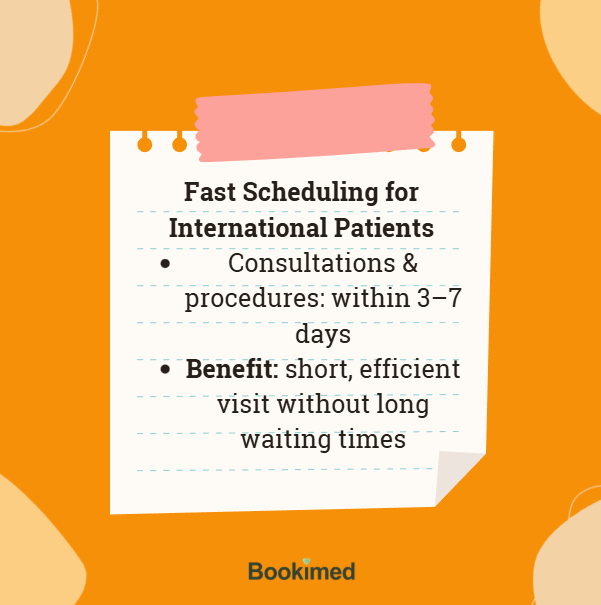
Consultations and procedures can often be scheduled within 3–7 days, allowing international patients to complete diagnostics, treatment, and early postoperative visits within a short trip.

Transparent and accessible pricing

The cost of eye lens replacement surgery in Thailand, along with other prices, is typically far lower than in Western countries due to efficient healthcare operations rather than reduced quality. 

💡Centers offer all-inclusive packages that simplify budgeting.

Comfortable recovery environment

Patients benefit from hotel-standard rooms, English-speaking coordinators, convenient transport, and a calm environment suitable for early recovery after eye treatment.

Support through Bookimed

Bookimed assists patients in comparing ophthalmology centers using transparent ranking criteria, verified reviews, and clearly defined treatment programs. Coordinators help with doctor matching, scheduling, documents, and real price comparisons, making medical travel to Thailand more straightforward.

Why Eye Surgery Is More Affordable in Thailand

Lower pricing does not reflect lower quality. It is the result of structural differences in healthcare economics.

Why costs are lower

Factor Explanation.

Lower operating expenses Personnel, facility management, and clinical operations are more cost-efficient.

Competitive private sector : Multiple private hospitals offer ophthalmology services, stabilizing pricing.

High patient volume Efficient scheduling reduces procedure costs without affecting outcomes.

Package-based services Programs include diagnostics, surgery, and follow-ups at a fixed price.

Medical tourism optimization Streamlined administrative processes reduce overhead for international cases.

Most Common Thai Ophthalmology Treatments

The country offers a wide range of modern eye treatments. These are the procedures most frequently chosen by international patients traveling for eye care in Thailand. 

Procedure What It Involves Key Points
Cataract Surgery & Lens Replacement Phaco or femtosecond-assisted extraction with monofocal, multifocal, EDOF, or toric IOLs. 15–30 min per eye; next-day follow-up; predictable results.
Laser Vision Correction (LASIK, Femto-LASIK, SMILE, PRK) Corneal reshaping using flap-based or flapless techniques. SMILE is minimally invasive; PRK suits thin corneas.
Retina Treatments Management of diabetic retinopathy, macular disease, and retinal tears/detachments. Includes injections, laser therapy, and vitreoretinal surgery. Focused on preserving and restoring vision.
Glaucoma Procedures Laser, MIGS, or traditional filtration surgery. Selected based on target eye pressure and disease stage.
Cornea & Keratoconus Care Cross-linking, keratoplasty, and infection management. Guided by corneal imaging (topography/tomography).
Oculoplastics Eyelid and tear-duct surgery. Performed for functional and medical indications.

All-Inclusive Eye Treatment Packages

All-inclusive ophthalmology packages make it easier for international patients to understand the total cost of their treatment and trip. 

✅ These programs are designed to reduce unexpected expenses and simplify planning, especially for short medical visits. Partner clinics also offer limited-time special deals, which may include discounted procedure fees, complimentary hotel nights, or free diagnostics.

What packages usually include

Included Confirm in Advance
Basic diagnostics, consultation, and preoperative tests. Whether pricing covers one or both eyes.
Surgery, anesthesia, and standard operating-room materials. Type of IOL (monofocal, multifocal, EDOF, toric) or specific refractive technology (LASIK, SMILE, PRK).
Early postoperative visits (typically within the first few days). Costs for premium lenses, optional upgrades, or additional medications.
Case management support and assistance with scheduling. Whether long-term medications are included after leaving Thailand.
Hotel nights, airport transfers, or local transportation—when part of a package. Details of recovery accommodations or length of stay.

💡 Packages allow patients to compare options more easily and provide clarity on what is covered during the treatment journey. In many cases, additional procedures or upgraded services can be added to the package after discussing the patient’s individual needs with the clinic

Trusted Safety Standards and Risks

Thai hospitals apply strict safety protocols similar to those used in major international centers. Institutions follow global guidelines and use FDA-approved laser systems, advanced microscopes, and recognized intraocular lens brands.

Safety is reinforced by:

  • Detailed preoperative evaluations.

  • Controlled surgical environments.

  • Sterile instrumentation and real-time monitoring.

  • Standard postoperative care instructions and scheduled follow-ups.

International accreditation, modern equipment, and high-level surgeon training all contribute to Thailand’s strong reputation in regional medical rankings, including listings of Asia’s leading eye care centers.

✅ Although modern ophthalmology procedures are generally safe, some complications may occur depending on the treatment type. These are typically uncommon, and thorough preoperative evaluations help reduce risks.

Common or mild risks

  • Temporary dry eye.

  • Light sensitivity or glare/halos.

  • Mild inflammation.

  • Fluctuating or blurred vision during healing.

  • Elevated eye pressure after surgery.

Less common risks

  • Infection (endophthalmitis).

  • Corneal haze (mainly after surface procedures like PRK).

  • IOL misalignment or rotation after lens replacement.

  • Residual refractive error requiring enhancement.

  • Minor epithelial defects or flap-related issues (LASIK).

Rare but serious risks

  • Retinal detachment.

  • Corneal ectasia.

  • Persistent severe inflammation.

  • Significant vision loss.

💚 Proper screening, modern technology, controlled surgical environments, and adherence to postoperative care instructions significantly reduce these risks.

How to Choose the Best Eye Hospital in Thailand

faq image

Designed by Freepik

Choosing the right eye clinic in Thailand is easier when focusing on measurable criteria rather than general claims like “Asia No.1 eye hospital.”

Key selection criteria

  • Surgeon training, fellowships, and memberships in global organizations.

  • Access to current technologies, such as femtosecond lasers or advanced OCT.

  • Transparent treatment programs and clearly defined packages.

  • Responsive international departments.

  • Presence of accreditation or external quality audits.

  • Availability of subspecialists (cataract, retina, glaucoma, cornea, pediatric).

How Bookimed rankings work

Bookimed uses a scoring system to identify Thailand’s top eye clinics based on:

  • The number of ophthalmology patients treated through the platform.

  • Patient review scores.

  • Up-to-date medical programs and price lists.

  • Speed of responses to requests.

  • Completeness of clinic profiles.

Clinics choosing sponsored placement appear as “Promoted,” while all others follow the standard algorithm.

Thailand supports medical travel with a tourist-friendly environment, convenient transport, and a wide range of accommodations. The country is one of Asia’s most visited destinations, supported by infrastructure described by the Tourism Authority of Thailand.

Practical Considerations for Medical Tourists

Topic Notes
Visa rules Many nationalities qualify for 30–60-day visa-free entry; current details are published by the Thai Ministry of Foreign Affairs.
Accommodation Hotels near major medical districts offer comfort and easy clinic access. Patients often choose areas with strong infrastructure, as listed on Amazing Thailand.
Transport Taxis and ride-hailing services such as Grab are widely available and reliable.
Climate Thailand’s tropical climate makes UV protection important after eye procedures. Weather patterns can be checked on the Thai Meteorological Department website.
Time needed Cataract treatment typically requires 5–10 days in Thailand; refractive procedures usually require 3–5 days, including follow-up.

These factors help patients plan their stay effectively, schedule appropriate follow-up care, and ensure a smooth return home after eye treatment.

How Bookimed Helps Patients

Bookimed supports patients who are comparing their options, including an eye hospital in Thailand, by providing recommendations from Asia’s top eye hospitals. The service provides structured guidance from the first inquiry to the final postoperative check.

💚 Bookimed coordinators assist with:

  • Clinic selection based on medical details, treatment goals, and patient reviews.

  • Transparent pricing, including guidance on all-inclusive eye treatment packages and limited-time offers from partner clinics.

  • Appointment scheduling, follow-up planning, and communication with medical teams.

  • Document collection, such as medical reports, imaging, or previous prescriptions.

  • Understanding deposit rules, payment options, and refund conditions before travel.

  • Travel coordination, including recommended arrival days and expected stay durations for cataract, LASIK, SMILE, and retinal procedures.

This support helps patients compare ophthalmology options in Thailand more confidently and avoid unexpected costs or logistical complications, with Bookimed assisting 24/7 at no cost to the patient.

Frequently Asked Questions

How long should a patient stay in Thailand for eye treatment?

Most cataract treatments require 5–10 days, while refractive procedures such as LASIK or SMILE typically require 3–5 days, including follow-up.

Are eye procedures in Thailand safe?

Yes. Thai hospitals use internationally recognized safety protocols, FDA-approved technologies, and modern diagnostic systems. Centers hold global accreditations and follow clinical standards comparable to Asia’s leading eye hospitals.

Can both eyes be treated during one trip?

In many cases, yes. For cataracts, surgeons often operate on the second eye within a short interval. For refractive surgery, both eyes are usually treated on the same day.

What payment methods are available?

Most Thai clinics accept credit cards, cash, or mixed payments. Some offer installment options. Bookimed coordinators explain deposit requirements and how they apply to each clinic.

Is English commonly spoken in clinics?

Yes. International departments have English-speaking staff, making communication smooth for patients traveling from abroad.

References

FAQ zu Augenheilkunde in Thailand

Diese FAQs stammen von echten Patienten, die über Bookimed medizinische Hilfe suchen. Die Antworten werden von erfahrenen medizinischen Koordinatoren und vertrauenswürdigen Klinikvertretern gegeben.

Was sind die dokumentierten Ergebnisse und das Sicherheitsprofil von Augenoperationen, die von thailändischen Augenärzten durchgeführt werden?

Thailändische Augenärzte berichten von Erfolgsraten von über 95 % bei LASIK- und Katarakt-Eingriffen. Die meisten führenden Einrichtungen verfügen über eine JCI-Akkreditierung und befolgen internationale Sicherheitsstandards. Zentren wie das Bumrungrad International Hospital erreichen selbst bei komplexen Fällen eine Erfolgsquote von 90 %. Diese Ergebnisse sind mit westlichen medizinischen Maßstäben vergleichbar.

  • Sehschärfenwiederherstellung: Über 95 % der LASIK-Patienten erreichen eine Sehkraft von 20/20 oder besser.
  • Sicherheitsprotokolle: Die Infektionsraten sind extrem niedrig und liegen zwischen 0,06 % und 0,69 %.
  • Klinisches Volumen: Das TRSC International Eye and Vision Center hat bereits über 100.000 Augen behandelt.
  • Spezialisierte Expertise: Führende Ärzte wie Dr. Ekktet Chansue waren Pioniere für LASIK und ReLEx in Thailand.

Bookimed-Experteneinblick: Daten zeigen einen klaren Zusammenhang zwischen klinischem Volumen und Sicherheit in Bangkok. Multispezialisierte Krankenhäuser wie das Bumrungrad International Hospital betreuen jährlich über 1 Million Patienten. Boutique-Zentren wie das TRSC International Eye and Vision Center konzentrieren sich hingegen ausschließlich auf Augen. Beide Modelle bieten hohe Erfolgsraten, da ihre Chirurgen oft internationale Stipendien von US- oder britischen Institutionen erhalten haben.

Patientenkonsens: Patienten merken an, dass die Operation in großen Krankenhäusern zwar Routine und erfolgreich ist, die Genesung jedoch eine sorgfältige Planung erfordert. Viele empfehlen, vor der Reise eine präoperative Untersuchung zu Hause durchführen zu lassen, um sicherzustellen, dass man ein geeigneter Kandidat ist.

Wie werden thailändische Augenärzte zertifiziert und wie erstreckt sich diese Anerkennung international?

Thailändische Augenärzte erwerben ihre Qualifikationen durch das Royal College of Ophthalmologists of Thailand (RCOPT) nach einer 3-jährigen Facharztausbildung und strengen Facharztprüfungen. Die internationale Anerkennung erfolgt durch Zertifizierungen des International Council of Ophthalmology (ICO) sowie durch Fellowships an Institutionen wie der Harvard University oder der Washington University. Viele Chirurgen besitzen sowohl eine thailändische als auch eine US-amerikanische Facharztzertifizierung.

  • Lokale Zertifizierung: Erfordert ein 6-jähriges Medizinstudium sowie eine 3-jährige RCOPT-Facharztausbildung.
  • Globale Standards: Die Ausbildung folgt häufig den klinischen Standards der American Academy of Ophthalmology (AAO).
  • Internationale Fellowships: Chirurgen wie Dr. Ponpawee Jindarak absolvieren eine fortgeschrittene Ausbildung an US-Universitäten.
  • Globale Prüfungen: Viele Spezialisten erwerben den Titel Fellow of the International Council of Ophthalmology (FICO).

Expertenmeinung von Bookimed: Thailändische Augenspezialisten verfügen häufig über mehrere internationale Lehrqualifikationen. Dr. Anun Vongthongsri war beispielsweise der erste Wahl-Fellow aus Südostasien an der Washington University. Die Wahl von Chirurgen mit einem solchen spezifischen akademischen Hintergrund garantiert oft, dass sie dieselben chirurgischen Protokolle anwenden wie in erstklassigen westlichen Krankenhäusern.

Patientenkonsens: Patienten merken an, dass die Überprüfung von RCOPT- und AAO-Zugehörigkeiten für Sicherheit sorgt. Sie betonen, dass erstklassige Chirurgen oft über eine nachweisbare Ausbildung aus den USA, Großbritannien oder Japan verfügen.

Was macht jemanden in Thailand zu einem geeigneten Kandidaten für LASIK, SMILE, LASEK, linsenbasierte refraktive Eingriffe oder Kataraktoperationen?

Augenärzte in Thailand bestimmen die Eignung für refraktive Chirurgie basierend auf Alter, Stabilität der Sehstärke und Hornhautdicke. Kandidaten müssen zwischen 18 und 20 Jahre alt sein und seit 12 Monaten eine stabile Sehstärke aufweisen. Die meisten Verfahren erfordern eine gesunde Hornhaut sowie das Fehlen von Autoimmunerkrankungen oder einer Schwangerschaft.

  • LASIK-Eignung: Erfordert ausreichend Hornhautgewebe, um sicher einen Flap für eine leichte bis mittelschwere Korrektur zu erstellen.
  • SMILE (ReLEx)-Profil: Ideal bei starker Kurzsichtigkeit oder aktivem Lebensstil aufgrund des minimalinvasiven, flaplosen Ansatzes.
  • LASEK und PRK: Empfohlen für Patienten mit dünner oder unregelmäßiger Hornhaut, bei denen LASIK nicht möglich ist.
  • Linsenbasierte Verfahren: Am besten für Patienten über 50 oder solche mit sehr hohen Dioptrienwerten und Presbyopie.
  • Kataraktoperation: Geeignet für Patienten mit getrübter Sicht, die einen Austausch der intraokularen Linse (IOL) für den Alltag benötigen.

Bookimed-Experteneinschätzung: Thailändische Augenzentren wie das TRSC International Eye and Vision Center sind oft ausschließlich auf refraktive Chirurgie spezialisiert. Dieses hohe Patientenaufkommen mit über 100.000 behandelten Augen ermöglicht es Chirurgen, sich auf spezifische Laserplattformen zu spezialisieren. Die Wahl eines spezialisierten Augenzentrums gegenüber einem allgemeinen Krankenhaus stellt oft den Zugang zu präziseren Diagnosegeräten für dünnere Hornhäute sicher.

Patientenkonsens: Patienten berichten, dass Ärzte in Bangkok oft gründliche Beratungen ohne Druck zur Durchführung anbieten. Sie schätzen Spezialisten, die sich die Zeit nehmen, verschiedene Linsenoptionen und spezifische Seheinschränkungen vor der Operation zu erklären.

Wie lange bleiben Patienten nach einer Augenoperation normalerweise in Thailand und wie sieht der Standard-Genesungszeitplan für LASIK, Katarakt oder Hornhautvernetzung aus?

Patienten bleiben nach einer Augenoperation in der Regel 7 bis 14 Tage in Thailand. Dieser Zeitraum stellt sicher, dass sich die Augen vor Langstreckenflügen stabilisieren. Standard-Nachuntersuchungen finden an Tag 1 und Tag 7 statt. Programme in JCI-akkreditierten Zentren wie dem Bumrungrad International Hospital priorisieren diese Sicherheitsuntersuchungen für internationale Reisende.

  • LASIK-Genesung: Patienten kehren oft innerhalb von 2 Tagen an den Arbeitsplatz zurück. 80 % der Heilung erfolgen sofort.
  • Katarakt-Zeitplan: Die Sehkraft verbessert sich innerhalb von 24 Stunden. Patienten sollten für 1 Woche schweres Heben vermeiden.
  • Hornhautvernetzung (Cross-linking): Erwarten Sie 3 Tage Lichtempfindlichkeit. Körperliche Aktivitäten können nach 2 Wochen wieder aufgenommen werden.
  • Flugsicherheit: Trockene Kabinenluft birgt Komplikationsrisiken. Chirurgen empfehlen die stündliche Verwendung von konservierungsmittelfreien Tropfen.

Bookimed-Experteneinschätzung: Daten von Zentren mit hohem Patientenaufkommen wie dem Yanhee International Hospital zeigen, dass die klinische Stabilität oft dem visuellen Komfort vorausgeht. Während Patienten medizinisch ab Tag 7 für Flugreisen freigegeben sind, berichten diejenigen, die 10+ Tage bleiben, von weniger Problemen mit trockenen Augen. Die Buchung eines Hotels in der Gegend von Sukhumvit in der Nähe großer Kliniken reduziert die körperliche Belastung nach der Operation zusätzlich.

Patientenkonsens: Patienten betonen, dass es wichtig ist, vor dem Flug eine ausdrückliche medizinische Freigabe einzuholen. Einige erlebten unerwartete Schmerzen durch den Kabinendruck, wenn sie zu früh reisten. Sie empfehlen außerdem, zusätzliche Sonnenbrillen einzupacken und ein Budget für einen längeren Aufenthalt einzuplanen, falls die Heilung mehr Zeit in Anspruch nimmt.

Welche thailändischen Regionen und Krankenhauscluster gelten als Kompetenzzentren für Augenheilkunde und was unterscheidet sie?

Bangkok ist Thailands wichtigstes Zentrum für Augenheilkunde und beherbergt die höchste Konzentration an spezialisierten Augenkliniken und JCI-akkreditierten Zentren. Während Regionen wie Pattaya eine qualitativ hochwertige Versorgung bieten, dominiert die Hauptstadt mit fortschrittlichen Technologien wie ReLEx SMILE und komplexen Hornhauttransplantationen. Zu den führenden Einrichtungen gehören das Bumrungrad International Hospital und das TRSC International Eye and Vision Center.

  • Bangkok-Cluster: Umfasst spezialisierte Kliniken wie TRSC und Laser Vision am Bangkok Eye Hospital.
  • Pattaya-Cluster: Bietet fortschrittliche Versorgung durch das BDMS-Netzwerk im Bangkok Hospital Pattaya.
  • Technologiezugang: Zentren in Bangkok nutzen Zeiss VisuMax und Alcon Centurion für hochpräzise Operationen.
  • Fachwissen: Experten wie Dr. Ekktet Chansue waren Pioniere bei LASIK- und SMILE-Techniken in Thailand.
  • Versorgungsumfang: Regionale Zentren konzentrieren sich auf die allgemeine Versorgung, während Bangkok intensive Netzhautoperationen durchführt.

Bookimed-Experteneinblick: Daten zeigen eine klare Unterscheidung zwischen multidisziplinären Zentren und spezialisierten Augenkliniken. Kliniken wie das TRSC International Eye and Vision Center konzentrieren sich ausschließlich auf Augenheilkunde und haben bereits über 100.000 Augen behandelt. Diese spezialisierten Zentren bieten oft schnellere Wege für refraktive Chirurgie. Im Gegensatz dazu sind JCI-akkreditierte Zentren wie das Bumrungrad International Hospital besser für Patienten mit Begleiterkrankungen geeignet, da sie Zugang zu über 70 medizinischen Fachabteilungen unter einem Dach bieten.

Patientenkonsens: Patienten stellen fest, dass Bangkok aufgrund der überlegenen Technologie die unangefochtene Wahl für fortschrittliche Sehkorrekturen bleibt. Sie betonen, dass regionale Optionen zwar günstiger sein mögen, die Zentren der Hauptstadt jedoch eine eintägige Genesung bei SMILE-Verfahren und erstklassige englischsprachige Unterstützung bieten.

Welche Reiseempfehlungen nach der Operation werden nach einer Augenoperation in Thailand gegeben und wie bald kann man nach Hause zurückkehren?

Nach einer Augenchirurgie in Thailand ist in der Regel ein Aufenthalt von 1 bis 7 Tagen erforderlich. Die Erholungszeiten variieren je nach Eingriff und Entfernung. Die meisten LASIK-Patienten fliegen innerhalb von 3 Tagen international. Komplexe Operationen wie Hornhauttransplantationen oder Netzhautreparaturen erfordern 7 bis 14 Tage, bevor ein sicherer Flug möglich ist.

  • LASIK-Erholung: Heimflug 24–48 Stunden nach der Operation nach einem erfolgreichen Nachsorgetermin.
  • Kataraktchirurgie: Ein Aufenthalt von 7–10 Tagen gewährleistet eine ordnungsgemäße Heilung vor Langstreckenflügen.
  • Pflege während des Flugs: Verwenden Sie stündlich konservierungsmittelfreie Tropfen, um der extremen Trockenheit in der Kabine entgegenzuwirken.
  • Aktivitätsbeschränkungen: Vermeiden Sie das Heben schwerer Gepäckstücke, um gefährliche Druckanstiege im Auge zu verhindern.

Experteneinschätzung von Bookimed: Kliniken mit hohem internationalen Patientenaufkommen, wie das Bumrungrad International Hospital, stellen spezielle medizinische Schreiben für Fluggesellschaften aus. Diese Dokumente helfen Patienten, die Flüssigkeitsbeschränkungen für essentielle medikamentöse Tropfen zu umgehen. Dieser Service ist Standard bei JCI-akkreditierten Einrichtungen, die jährlich über 1.000.000 Patienten behandeln.

Patientenkonsens: Patienten berichten, dass Lichtempfindlichkeit das größte Hindernis beim Reisen ist. Viele empfehlen, hochwertige Sonnenbrillen und einen starren Augenschutz im Handgepäck für den Heimflug mitzuführen.

Is it safe to undergo eye surgery in Thailand?

Eye surgery in Thailand is safe and follows global protocols. Accredited facilities like Bumrungrad International Hospital and TRSC International Eye and Vision Center use modern diagnostics. Specialists often hold fellowships from leading US or UK institutions. Success rates for procedures like LASIK match Australian clinical benchmarks.

  • Hospital accreditation: Leading centres like Navamin 9 Hospital hold JCI accreditation.
  • Specialised expertise: Dr Ekktet Chansue pioneered LASIK and ReLEx SMILE in Thailand.
  • High volume: Bumrungrad International serves 1,000,000 patients yearly with robotic technology.
  • Specialist clinics: Single-specialty centres focus entirely on vision correction and cataracts.

Bookimed Expert Insight: Thai eye centres often function as regional hubs. They often house niche sub-specialists in one corridor. For instance, Laser Vision at Bangkok Eye Hospital has separate units for glaucoma, retina, and neuro-ophthalmology. This concentration of expertise allows for same-day cross-consultations. These might take weeks to organise in Australia.

Patient Consensus: Patients value detailed consultations where doctors explain every solution without rushing. Many note that staying for immediate post-op checks in Thailand makes recovery feel more controlled and professional.

How do I verify the credentials of an ophthalmologist or hospital in Thailand?

Verify an ophthalmologist or hospital in Thailand by checking the Medical Council of Thailand website. Look for Joint Commission International (JCI) accreditation at facilities like Bumrungrad International Hospital. Australian patients should validate specialist fellowships through the Royal College of Ophthalmologists of Thailand.

  • Medical registration: Match the doctor's name against the Medical Council of Thailand registry.
  • Hospital accreditation: Confirm JCI or ISO 9001:2015 status for clinical safety standards.
  • Specialist training: Look for fellowships from international bodies like the Illinois Eye and Ear Infirmary.
  • Facility volume: High-volume centres like Bumrungrad treat over 1,000,000 patients every year.

Bookimed Expert Insight: Thailand’s top hospitals often employ doctors with dual fellowships from the USA or UK. For example, specialists at TRSC International Eye and Vision Center often hold US clinical fellowships. These often come from institutions like Washington University. This training indicates expertise in laser and refractive techniques.

Patient Consensus: Patients find that major Thai hospitals have helpful international desks. These desks clearly explain doctor credentials. Patients suggest matching residency and subspecialty certificates against official hospital profiles. Do this to verify consistency before booking any surgery.

Can I fly immediately after eye surgery in Thailand?

Flying immediately after eye surgery in Thailand is generally restricted. It poses serious risks such as permanent vision loss. Cabin pressure changes and dry air can delay healing or cause internal eye pressure spikes. Recovery timelines vary between 24 hours and several weeks depending on the procedure.

  • Retinal detachment: Wait 14+ days if gas bubbles were used during surgery.
  • LASIK or SMILE: Patients typically wait 3 to 7 days before international flights.
  • Cataract surgery: Most specialists recommend waiting 3 to 5 days for long trips.
  • Post-op reviews: Expect mandatory checks 24 hours and 7 days after the operation.

Bookimed Expert Insight: Specialised centres like TRSC International Eye and Vision Center have restored eyesight in over 100,000 eyes. These high-volume clinics often provide detailed flight-safety protocols. Choosing a dedicated eye hospital means specialists are available specifically for post-operative travel clearances.

Patient Consensus: Patients in Thailand note that doctors often provide free initial advice. They spend significant time explaining local recovery steps. It is vital to keep all prescribed drops in carry-on luggage to combat extreme aircraft cabin dryness.

Will medical staff and eye specialists in Thailand speak English?

Thai eye specialists in private hospitals speak fluent English. This is standard in their medical training. Major centres like Bumrungrad International Hospital and TRSC International Eye and Vision Center regularly treat Australians. Many specialists hold international fellowships from the US, UK, or Japan.

  • Expert specialists: Doctors like Dr Sumet Supalaset speak fluent English and have international training.
  • Accredited facilities: JCI-accredited centres such as Navamin 9 Hospital maintain high staff communication standards.
  • International focus: Clinics like Laser Vision at Bangkok Eye Hospital specifically serve Australian patients.
  • Support services: Leading private hospitals provide in-house interpreters and English-language medical documentation.

Bookimed Expert Insight: Top eye clinics in Bangkok handle high patient volumes that benefit English speakers. Centres like TRSC International Eye and Vision Center have treated over 100,000 eyes. This volume means clinical staff use English daily for complex refractive surgery explanations. Choosing a single-specialty clinic often results in more consistent English fluency than general hospitals.

Patient Consensus: Patients find that Thailand's private clinics provide clear advice without language barriers. Many note that major hospitals guide foreigners through the entire process with English-speaking support teams.

Are medical travel packages for ophthalmology in Thailand inclusive of aftercare and medications?

Thai ophthalmology packages typically include post-operative check-ups and initial take-home medications. Most centres bundle antibiotic eye drops and anti-inflammatories for the first 14 days. Major facilities like Laser Vision at Bangkok Eye Hospital also provide sleep goggles and specialised sunglasses.

  • Medication supply: Packages cover initial medicated drops but exclude long-term refills for chronic conditions.
  • Clinical aftercare: Follow-up tests and eye pressure checks are standard before flying home.
  • Surgical inclusions: Fees usually cover theatre costs, anaesthesia, and the surgeon's professional fees.
  • Protective gear: Clinics often provide eye shields and artificial tears for the first month.

Bookimed Expert Insight: Thai clinics like TRSC International Eye and Vision Center often offer family eye exams at reduced rates. Many patients miss this opportunity. Coordinating a family check-up during your recovery stay delivers significant value. Always confirm if your specific quote allows for these diagnostics before arrival.

Patient Consensus: Patients note that doctors in Thailand provide thorough explanations without charging extra. The clinical experience is smooth. However, budgeting for extra lubricants or unexpected follow-up reviews is recommended for peace of mind.

Do I need a special visa for medical treatment in Thailand?

Most Australians do not need a special medical visa for routine eye surgery in Thailand. Quick procedures such as LASIK, cataract surgery, or ReLEx SMILE often use the 30-day visa-exempt entry. Complex retinal detachment or corneal transplants requiring longer stays need specific visas.

  • Standard entry: Visa-exempt entry covers stays up to 30 days for most ophthalmic treatments.
  • Tourist visa (MT): Necessary for procedures and recovery requiring up to 60 days.
  • Non-immigrant O visa: Required for complex surgeries or therapies lasting more than 60 days.
  • Destination Thailand visa: A 5-year multi-entry option for long-term or recurring eye care.

Bookimed Expert Insight: Centres like TRSC International Eye and Vision Center have dedicated teams for international paperwork. If a procedure needs multiple follow-ups, these teams provide letters for visa extensions.

Patient Consensus: Patients note that standard tourist entry works well for quick laser eye surgery. They suggest bringing a clear treatment plan and appointment confirmation. They also recommend confirming review dates to ensure the entry period covers the entire recovery.

Alle medizinischen Inhalte auf dieser Seite werden von Autoren mit spezialisierter medizinischer Ausbildung erstellt und von zertifizierten Fachärzten des jeweiligen Fachgebiets überprüft. Medizinische Überprüfung durch Fahad Mawlood, Medizinischer Redakteur und Data Scientist.

Zuletzt aktualisiert: July, 2026.

  • Statistiken: Die Zahlen basieren auf der internen Datenbank von Bookimed vom July 2026 und umfassen die Analyse von 12,450 Patientenanfragen an 25 akkreditierten Kliniken in .
  • Preise: Die Kostenangaben werden direkt von den Partnerkliniken von Bookimed bereitgestellt und regelmäßig aktualisiert, um die Marktbedingungen im 2026 widerzuspiegeln. Die tatsächlichen Ausgaben können je nach Fallkomplexität, Erfahrung des Chirurgen und Standort der Klinik abweichen.
  • Klinische Daten: Behandlungsergebnisse und Patientenzufriedenheitswerte werden aus der verifizierten Klinikdatenbank von Bookimed erhoben und durch Daten aus peer-reviewten medizinischen Quellen wie PubMed, The Lancet, JAMA und NEJM (2023–2026) gestützt.

Alle Daten dienen ausschließlich allgemeinen Informationszwecken und spiegeln möglicherweise nicht individuelle Ergebnisse oder Erfahrungen wider.

Kostenlose Beratung erhalten

Wählen Sie die beste Art und Weise, Sie zu kontaktieren