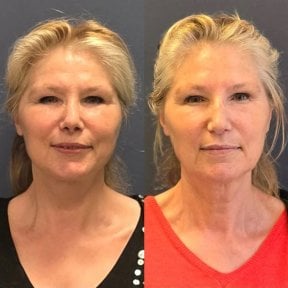
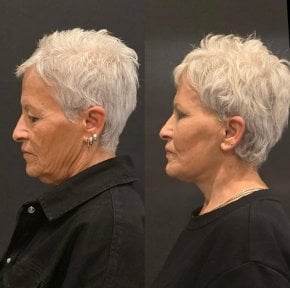
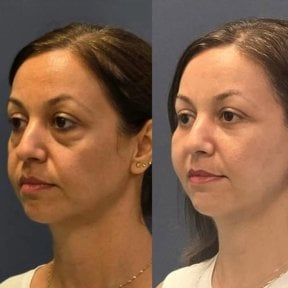
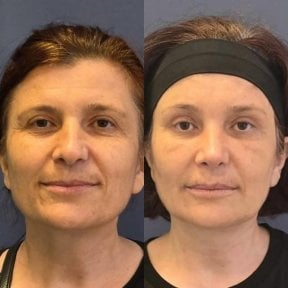
Eine Eigenfetttransplantation (Lipofilling) in der Türkei kostet typischerweise zwischen $1,500 und $4,000. Der Endpreis hängt von der Anzahl der Behandlungsareale, der Entnahmetechnik und dem Standort der Klinik ab. In Deutschland kosten vergleichbare Eingriffe im Durchschnitt $5,500. Patienten erzielen Ersparnisse von etwa 51% gegenüber deutschen Preisen. Reguläre türkische Pauschalangebote beinhalten Voruntersuchungen, Beratungsgespräche, lokale Transfers sowie häufig Übernachtungen in 4- oder 5-Sterne-Hotels.
Expertenmeinung von Bookimed: Die Wahl einer Klinik mit fachärztlich spezialisierten Chirurgen bietet oft einen besseren Mehrwert als die reine Suche nach dem niedrigsten Preis. Beispielsweise bietet Doz. Dr. Esra Ozbasli hochwertige Pakete für eine genitale Eigenfettbehandlung für rund 2.400 € an. Dieser Preis umfasst bereits ein 5-Sterne-Hotel sowie VIP-Transfers. Viele führende Kliniken wie das Quartz Hospital oder das Istanbul Aesthetic Plastic Surgery Center setzen moderne VASER-Technologie ein. Dieses Verfahren sichert hochwertige Fettzellen und verbessert so die Überlebensrate nach dem Transfer.
| Türkei | Polen | Tschechische Republik | |
| Lipofilling | von $1,460 | von $3,000 | von $2,800 |
Dr. Yaman führt jährlich 500-600 Eingriffe durch und ist am Lokman Hekim Istanbul Hospital auf natürlich wirkende Ergebnisse bei Lipofilling und Bodycontouring spezialisiert.
Dr. Aydinol ist auf die Kombination von Eigenfetttransfer mit Implantaten für eine natürlich wirkende Brustvergrößerung spezialisiert, gestützt auf umfassende Forschung und Mitgliedschaften in internationalen Fachgesellschaften.
Dr. Uzunoglu ist am Memorial Şişli Hospital auf Lipofilling spezialisiert und bringt Fachwissen aus einer prestigeträchtigen Ausbildung sowie jahrelange praktische Erfahrung mit.
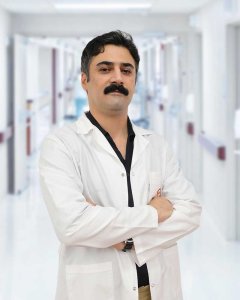
Op. Dr. Yunus Emre Şeker ist plastischer, rekonstruktiver und ästhetischer Chirurg in Antalya. Er schloss sein Studium an der Medizinischen Fakultät der Universität Ankara ab. Seine Facharztausbildung absolvierte er am Universitätsklinikum der Akdeniz-Universität. Er wurde bei Prof. Ömer Özkan ausgebildet. Er war aktives Teammitglied bei Uterus- und beidseitigen Armtransplantationen.
2023 belegte er den zweiten Platz (Klinischer Bereich) im Forschungswettbewerb der Türkischen Gesellschaft für Plastische, Rekonstruktive und Ästhetische Chirurgie. Von 2023 bis 2025 lehrte er Plastische Chirurgie am Ausbildungs- und Forschungskrankenhaus Adıyaman. Er hat auf nationalen Kongressen referiert und zu Publikationen beigetragen.
Klinische Schwerpunkte: Rhinoplastik (ultraschallgestützt, ethnisch), Gesichtsverjüngung, Brustästhetik, Körperformung, rekonstruktive Chirurgie.
Lipofilling in Turkey is highly safe when performed by surgeons board-certified by the International Society of Aesthetic Plastic Surgery (ISAPS). Success relies on sterile fat harvesting and purified reinjection techniques. Leading Istanbul clinics maintain safety through JCI accreditation and specialized closed-air systems to prevent contamination.
Bookimed Expert Insight: Data shows a clear safety divide between multi-specialty JCI hospitals and high-volume aesthetic conveyor clinics. While boutique clinics offer lower prices, JCI-accredited facilities move 10,000+ patients yearly with lower complication rates. Choosing a surgeon who is a certified VASER trainer often ensures more precise fat harvesting and smoother recovery.
Patient Consensus: Most patients report smooth recoveries but emphasize that fat survival typically ranges from 50% to 70%. Many advise choosing ISAPS-certified surgeons to avoid common issues like clumping or irregular fat absorption.
Lipofilling results in Turkey are considered long-term, as 30% to 70% of the transferred fat typically establishes a permanent blood supply. While initial volume stabilizes after 3 to 6 months, the surviving fat cells remain indefinitely, behaving like natural tissue during future weight fluctuations.
Bookimed Expert Insight: Data from top Istanbul clinics shows that surgeons using VASER liposuction for fat harvesting, like Dr. Leyla Arvas at Quartz Hospital, achieve higher retention. This gentle technology preserves cell viability better than traditional methods. For the most durable results, choose a specialist who prioritizes micro-fat or nano-fat techniques over high-volume injections.
Patient Consensus: Many patients notice a significant volume drop during the first 3 months but are satisfied with the natural, soft contour that remains. They emphasize that keeping a stable weight is the most critical factor for preserving their new shape long-term.
Recovery from fat grafting typically requires 1 to 2 weeks for initial healing, though visible swelling often persists for 3 to 6 weeks. While patients return to desk work within 14 days, final results stabilize only after 3 to 12 months once transferred cells establish a permanent blood supply.
Bookimed Expert Insight: While clinics often quote a 14-day recovery, our data shows that 5-star packages, like those from Assoc. Prof. Dr. Esra Özbaşlı, include 5-star hotel stays to manage the critical first 48 hours. This extra comfort is vital because peak swelling and bruising actually hit their maximum intensity on day 3, not day 1.
Patient Consensus: Patients emphasize that while you can return to normal life quickly, you must wear compression garments for 4–6 weeks to ensure the fat stays in place. Many note that results look overfilled initially, as 30–50% of the transferred volume naturally resorbs within the first few months.
Focus your consultation on the surgeon personal fat survival rates, board certifications, and harvesting techniques like VASER or manual liposuction. Confirm the total costs for fat processing and anesthesia. Ask for a specific 6-month recovery timeline and a written revision policy for post-op touch-ups.
Bookimed Expert Insight: Patient data shows that specialized clinics in Nişantaşı often provide higher-touch post-op support than high-volume hospitals. While large facilities like Hisar Hospital Intercontinental serve 250,000+ patients, smaller practices often allow for direct mobile contact with the surgeon. This access is vital for remote recovery once you return home.
Patient Consensus: Many patients suggest testing a clinic responsiveness with detailed follow-up questions before booking. They emphasize that a surgeon who seems rushed or dismissive during the initial consultation often provides less support during the critical 6-month healing phase.
Turkey is a global leader for medical treatments, with hair transplantation, dental care, and cosmetic surgery serving as the primary pillars. Specialized hubs in Istanbul and Antalya offer advanced procedures including rhinoplasty, liposuction, and lipofilling, alongside complex oncology and robotic-assisted surgeries.
Bookimed Expert Insight: While Istanbul is the primary hub, clinics in Izmir and Antalya are increasingly popular for combining surgery with coastal recovery. Data shows surgeons like Dr. Leyla Arvas at Quartz Hospital function as certified VASER trainers, indicating that Turkey doesn't just perform these procedures but actually sets the global training standards for advanced body contouring technologies.
Patient Consensus: Many patients choose Turkey for the all-inclusive experience, frequently praising the seamless VIP transfers and 5-star hotel stays. While most report high satisfaction, experienced patients emphasize that fat grafting often requires 2 sessions due to 30–70% natural resorption.